
1
/
of
1
PRH USA
Arquitectura y Abstracción
Arquitectura y Abstracción
Regular price
$ 750.00 MXN
Regular price
Sale price
$ 750.00 MXN
Unit price
/
per
Tax included.
Shipping calculated at checkout.
Couldn't load pickup availability
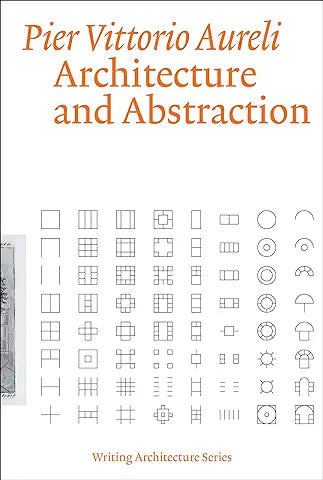
In this theoretical study of abstraction in architecture, the first of its kind, Pier Vittorio Aureli argues for a reconsideration of abstraction, its meanings, and its sources. Though architects have typically interpreted abstraction in formal terms (the deliberate reduction of design complexities to their essence), Aureli shows that abstraction arises from the material conditions of building production. In a lively study informed by Walter Benjamin, Karl Marx, Alfred Sohn-Rethel, and other social theorists, this book presents abstraction in architecture not as an aesthetic tendency but as a movement arising from the modern divisions of labor and consequent social asymmetries.
These divisions were anticipated by the architecture of antiquity, which established a distinction between manual and intellectual labor, and pressed the former into the service of the latter. Further abstractions emerged as geometry, used to survey territories, became an intermediary between land and money and eventually yielded the logic of the grid. In our age, architectural abstraction serves the logic of capitalism, embracing the premise that all things can be exchanged; even experience itself is a commodity. To resist this turn, Aureli seeks a critique of architecture that begins not by scaling philosophical heights, but by situating itself at the grassroots level of material practice.
These divisions were anticipated by the architecture of antiquity, which established a distinction between manual and intellectual labor, and pressed the former into the service of the latter. Further abstractions emerged as geometry, used to survey territories, became an intermediary between land and money and eventually yielded the logic of the grid. In our age, architectural abstraction serves the logic of capitalism, embracing the premise that all things can be exchanged; even experience itself is a commodity. To resist this turn, Aureli seeks a critique of architecture that begins not by scaling philosophical heights, but by situating itself at the grassroots level of material practice.
Compartir